

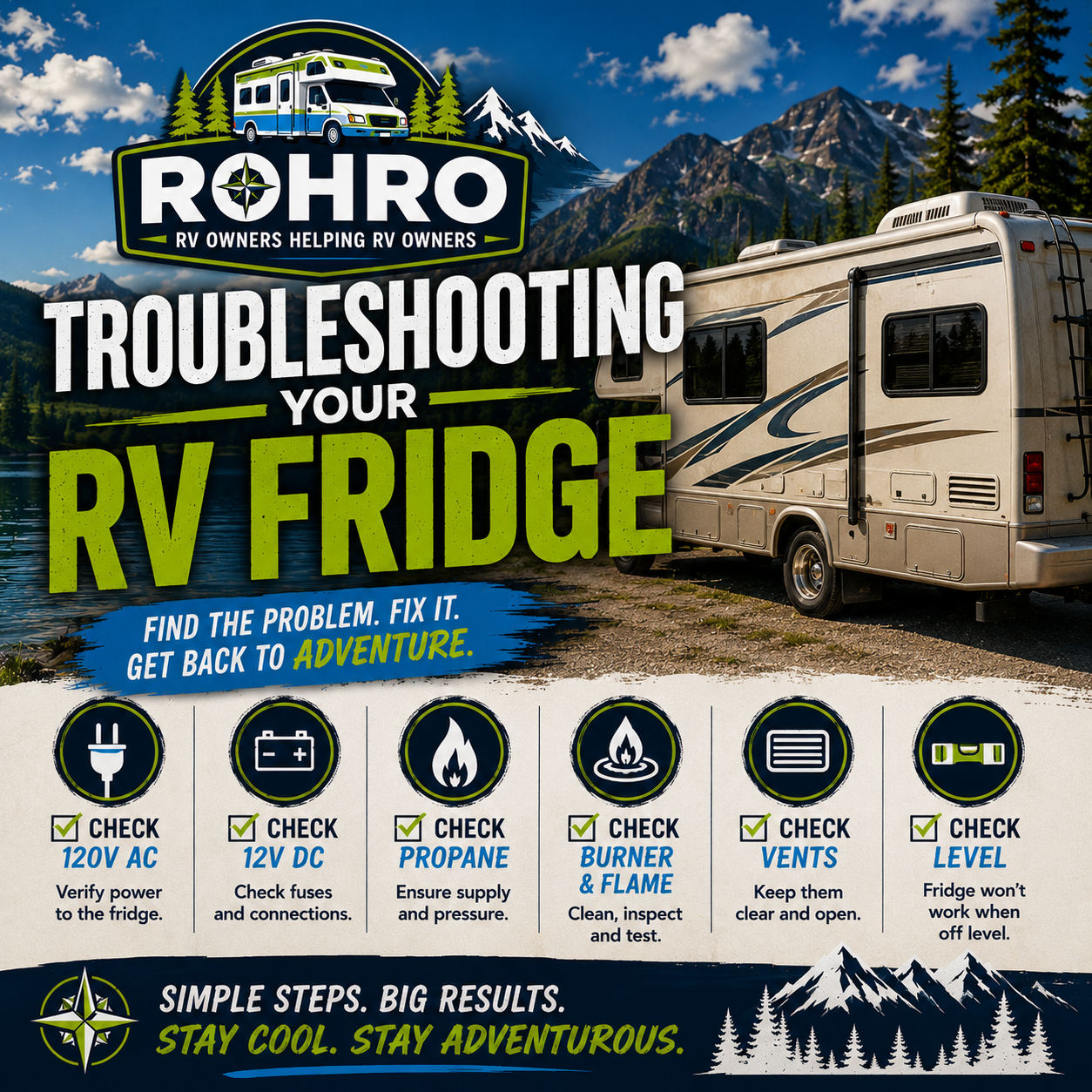
Aside from leaks, the most common issue in the summer I see are fridge problems. That being said, I would like to share an excerpt from The RV Blueprint Online Course
specifically this one:
Your RV’s fridge is a key part of keeping your food fresh and safe on the road. RV fridges are a bit different from the ones at home because they use a special process called "absorption cooling" and can run on either propane or electricity. Let’s go over how an absorption fridge works, what to expect in its start-up sequence, and how to troubleshoot common issues. 🕵️♂️🛠️
How Does an Absorption Fridge Work? ❄️💧
Unlike regular fridges that use a compressor, RV absorption fridges work with a combination of heat, chemicals, and evaporation. It's going to work this way regardless of power source. Propane, 110 electrical or 12 volt, those are just alternatives for the heat source. Here’s how it all happens:
1. Heating the Solution 🔥: A heat source (either propane flame or an electric heater) heats a chemical solution made of ammonia, hydrogen, and water.
2. Evaporation ☁️: As the solution heats up, ammonia evaporates and becomes a gas, which then moves up through a series of tubes that are angled just right so it doesn't rise too fast or too slow. (That's why being level is very important to your RV's fridge)
3. Cooling Down 🌬️: The ammonia gas mixes with hydrogen and cools down, which creates cold temperatures inside the fridge.
4. Repeating the Cycle 🔄: The cycle keeps repeating, keeping your fridge cold as long as there’s heat to start it all.
This cooling system doesn’t have any moving parts, which makes it quieter but also a little more complex to troubleshoot.
Avoiding making mistakes is just step one. If you want a complete, step-by-step roadmap to master your systems and handle roadside repairs without a $150/hr technician fee, grab a copy of ROHRO's RV Repair Today.
👉 Click Here to Download Your Copy Instantly for $9.99 CAD 
Starting Up Your RV Fridge ⚙️🔌
When you turn on the fridge, it goes through a start-up process to make sure everything’s working. Here’s what happens:
1. Power Source Check ⚡🛢️: The fridge checks to see if it’s running on electricity or propane. Most RV fridges can switch between power sources automatically.
2. Thermostat Check 🌡️: (Remember, even on propane your thermostat is controlled by a 12v brain that's always on and slowly drains your battery, remember that when your storing it.) The thermostat reads the fridge’s temperature to see if it’s too warm and needs cooling.
3. Heat Source Turns On 🔥: If the fridge is too warm, it activates the heating element (electricity or propane flame) to start the cooling process.
4. Cooling Begins ❄️: The ammonia solution heats up, evaporates, and the cooling cycle starts. After a while, the fridge should begin to feel cool.
Ignition Sequence for Propane 🔥⚡
If your fridge is running on propane, it goes through an extra ignition sequence. Here’s how this works:
1. Ignitor Sparks ⚡: The ignitor creates a spark, just like a lighter, to ignite the propane gas.
2. Gas Valve Opens 🛠️: The gas valve opens up, letting propane flow to the burner.
3. Flame Ignites 🔥: The spark lights the propane, creating the heat needed to start the cooling process.
4. Thermostat Monitors 🌡️: The thermostat keeps track of the temperature and adjusts the flame as needed to keep the fridge at the right temperature.
Troubleshooting Common RV Fridge Issues 🕵️♀️🔧
Let’s go over some common problems and how to fix them so you can keep your food fresh and safe.
1. Fridge Not Cooling 🥶❌
If the fridge isn’t cooling at all, here are a few things to check:
- Check Power Source 🔌🛢️: Make sure the fridge is receiving power from either electricity or propane. If you’re on electricity, check if you’re plugged into shore power. For propane, confirm the tank has fuel.
- Thermostat Setting 🌡️: Sometimes, the thermostat might be set too low. Turn it up a notch or two and give it a little time to adjust.
- Fridge Needs Leveling 🧭: Absorption fridges need to be level to work correctly. Use a small level to check, and adjust the RV as needed.
- Check The Door Seals 🧭: Door Seals leak all the time, check it.
- Air Flow 🌡️: Absorption fridges need airflow inside the unit to work, moving things around in your fridge so air can flow freely around, if its jammed tight and full the air won't flow as well. Also, simply putting a 12v fan in your fridge can make all the difference in the world as well.
2. Propane Ignitor Isn’t Sparking 🔥⚡
If you’re trying to run the fridge on propane and don’t hear the clicking sound of the ignitor, here’s what to check:
- Listen for Clicks 🔊: The ignitor should make a clicking sound when it’s working. If you don’t hear it, there could be a problem with the ignitor.
- Clean the Ignitor 🧽: Dust and dirt can block the spark. Turn off the fridge, then gently clean around the ignitor with a soft brush or cloth.
- Propane Flow Check 🛢️: Make sure propane is flowing from the tank. Sometimes turning the propane tank off and then back on can help reset the system.
3. Fridge is Cooling Poorly ❄️⏲️
If the fridge is cool but not as cold as it should be, there could be a few possible issues:
- Check Ventilation 🌬️: The fridge needs good airflow at the back to cool down. Make sure nothing is blocking the outside vents. Separate the stuff in the fridge for better airflow. Install a 12v fan.
- Ambient Temperature 🌡️: Absorption fridges can struggle in very hot weather. Keep windows or vents open to allow fresh air to circulate near the fridge.
- Thermostat Issues 🔄: If the thermostat isn’t working well, it may not regulate the temperature correctly. Try adjusting the setting to see if that helps.
- Check The Door Seals 🧭: Door Seals leak all the time, check it.
4. Fridge Keeps Turning Off 🔄🚫
If your fridge turns on and off unexpectedly, it could be due to power or propane issues:
- Check Electrical Connections 🔌: Sometimes, loose or damaged wires can cause the fridge to lose power. Check all connections and plugs, the 12v brain, the fuse in the converter, inline fuses and any that may be on the back of the fridge where the control board is as well.
- Propane Supply 🛢️: If your propane is low, the fridge might turn off. Make sure there’s enough propane in the tank.
- Thermostat and Sensor Check 🌡️: A faulty thermostat might be misreading the temperature and causing the fridge to turn off. If possible, have a professional test the thermostat.
5. Strange Smells, Sounds or Sights 🚨👃
Unusual smells, noises or sights from the fridge could mean there’s an issue:
- Propane Smell 🥴: If you smell propane, turn off the fridge and propane immediately, and ventilate your RV. There might be a leak, so get it checked by a professional.
- Ammonia Smell 💧: A strong ammonia smell can mean there’s a leak in the cooling system. Unfortunately, this usually requires a new cooling unit or fridge replacement.
- Clicking or Banging Noises 🔊: These could mean there’s air in the system or that something’s loose. Running the fridge for a while can help remove air pockets, but if noises persist, it’s best to get it checked.
- Yellow Dust Crystals 🌫️🟨: Known as the fridge killer. If you see yellow dust in the back of the fridge, this is a dead give away of the pipes leaking, often costing more to repair than a new fridge.
Basic Maintenance Tips for a Healthy Fridge 🧰🛠️
Here are some easy steps to keep your RV fridge in top shape:
1. Keep It Level 🧭: Remember, a level fridge works best! Use a level tool to check that your RV is balanced.
2. Ventilation 🌬️: Make sure the fridge’s outside vent is clear of debris, leaves, or dirt. This helps the cooling process run smoothly.
3. Inspect for Leaks 💧: Check propane connections occasionally to ensure no leaks. Use soapy water on connections; bubbles mean there’s a leak.
4. Regular Cleaning 🧽: Clean dust and dirt from around the burner, ignitor, and vents. Dust buildup can affect performance.
5. Defrost Regularly ❄️: Ice buildup can lower efficiency. If your fridge gets frosty, defrost it to let it cool better.
Avoiding making mistakes is just step one. If you want a complete, step-by-step roadmap to master your systems and handle roadside repairs without a $150/hr technician fee, grab a copy of ROHRO's RV Repair Today.
👉 Click Here to Download Your Copy Instantly for $9.99 CAD
Quick Recap 📝
1. How It Works: Heat starts a chemical cycle to cool the fridge.
2. Start-Up Sequence: Checks power, thermostat, and heat source.
3. Ignition Sequence (for Propane): Spark, gas flow, and flame create the heat.
4. Troubleshooting Common Issues: Use the tips above if your fridge isn’t cooling, making noises, or smells odd.
5. Keep Up with Maintenance: A little regular care keeps your fridge running well.
By following these steps, you’ll have a cool fridge that’s always ready for your next adventure. Happy camping! 🏕️🍉
This article was written in co-operation between RV Owners Helping RV Owners (ROHRO) and DM Tech RV Education.
DIY RV repairs aren't always the answer, but the more you know, the more money you can save! 👍
Would you like more education?
- We have our💻🎓🌐 ROHRO's The RV Blueprint Online Course🧑🏫
- Different 📚Offline Resources📚
- We also offer our free 📖RV Life Mastery Guides📖
We have something for all types of RVer's!
Visit us at🧑🤝🧑 The Official ROHRO Website ❓or just click the 🏠homepage in the menu up top!