
Understanding your RV’s electrical system doesn’t have to be complicated. Once you break it down, it’s really just about where power comes from, how it’s stored, and how it’s used.
Let’s walk through everything step-by-step in plain English.
⚡ The Big Picture: Two Types of Power
Your RV runs on two different electrical systems:
1. 12-Volt DC Power (Battery Power)
- Comes from your house batteries
- Similar to what powers your car
- Runs:
- Lights
- Water pump
- Furnace fan
- Fridge controls
- USB outlets
👉 Think of this as your essential, off-grid power system
2. 120-Volt AC Power (Household Power)
- Same power as your home outlets
- Runs:
- Air conditioner
- Microwave
- Regular wall plugs
- Coffee maker, TV, etc.
👉 This is your high-power, comfort system
🔌 Where Does RV Power Come From?
There are four main ways to power your RV:
1. Shore Power (Plugging In)
This is when you connect your RV to an external power source at:
- Campgrounds
- RV parks
- Your home
Common Plug Types:
- 15/20 amp (household plug)
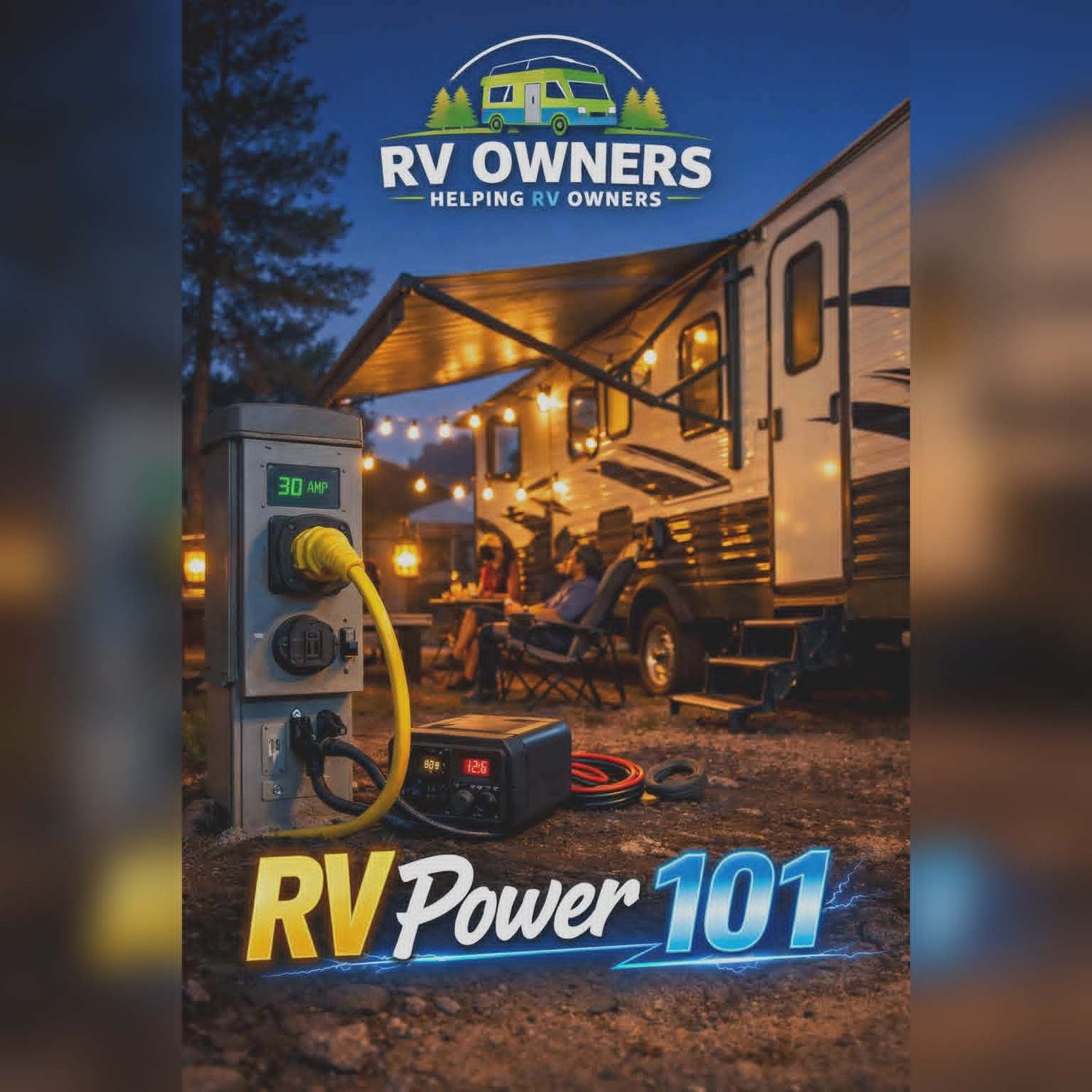
- 30 amp (most RVs)
- 50 amp (large RVs)
What Happens:
- Your RV gets full 120V power
- Your batteries get charged automatically
👉 This is the easiest and most reliable power source
2. Batteries (Stored Power)
Your batteries supply 12V DC power.
Types of RV Batteries:
- Lead-acid (flooded)
- AGM (maintenance-free)
- Lithium (lightweight, high performance)
What They Do:
- Power essentials when you're not plugged in
- Act as your energy storage system
👉 Batteries are your off-grid lifeline
3. Generator (Portable or Built-In)
Generators produce 120V AC power, just like shore power.
Types:
- Built-in RV generator
- Portable generator
What They Power:
- Everything (including AC and microwave)
👉 Great for:
- Boondocking
- Backup power
4. Solar Power ☀️
Solar panels convert sunlight into electricity.
How It Works:
- Solar panels collect energy
- Charge controller regulates it
- Charges your batteries
Important:
- Solar powers your batteries, not your RV directly (in most setups)
👉 Solar is silent, renewable, and perfect for off-grid living
🔄 How It All Works Together
Here’s the simple flow:
- Shore power / generator → powers RV + charges batteries
- Solar → charges batteries
- Batteries → power 12V systems
- Inverter (if you have one) → turns battery power into 120V
🔁 Key Components Explained
🔋 Battery Bank
Your stored energy.
🔄 Converter
- Converts 120V AC → 12V DC
- Powers your 12V system when plugged in
- Charges batteries
🔌 Inverter
- Converts 12V DC → 120V AC
- Lets you run household devices from batteries
☀️ Solar Charge Controller
- Protects batteries from overcharging from solar
⚡ Breaker Panel & Fuse Box
- Breakers = protect 120V system
- Fuses = protect 12V system
🧠 Simple Analogy
Think of your RV electrical system like this:
- Shore power / generator = water hose
- Solar = rain collection
- Batteries = water tank
- Converter/inverter = pumps and filters
- Appliances = faucets
⚠️ Common Beginner Mistakes
❌ Thinking batteries power everything
They don’t, high-power items (like AC) need shore power, generator, or a large inverter system.
❌ Mixing up amps and volts
- Volts = pressure
- Amps = flow
❌ Overloading circuits
Running too many appliances at once can trip breakers.
❌ Ignoring battery health
Batteries need proper charging and maintenance.
🔋 Pro Tips for RV Power Success
- Learn what runs on 12V vs 120V
- Upgrade to lithium batteries if you boondock often as they are a superior battery
- Add solar for independence and sustainable recharging
- Carry adapters for different plug types
- Monitor your battery levels regularly so you can tell when they start getting worn out
RV electrical isn’t about being an electrician, it’s about understanding the flow of power.
Once you know:
- Where power comes from
- How it’s stored
- How it’s used
…you’re in control.
And that’s when RV life gets a whole lot easier.
This article was written in co-operation between RV Owners Helping RV Owners (ROHRO) and DM Tech RV Education.
DIY RV repairs aren't always the answer, but the more you know, the more money you can save! 👍
Would you like more education?
- We have our💻🎓🌐 ROHRO's The RV Blueprint Online Course🧑🏫
- Different 📚Offline Resources📚
- We also offer our free 📖RV Life Guides📖
We have something for all types of RVer's!
Visit us at🧑🤝🧑 The Official ROHRO Website ❓or just click the 🏠homepage in the menu up top!